

Bellmore, NY · What we treat
Elbow and wrist pain in Bellmore.
A grip that gives out, or a forearm that’s stopped forgiving repetition: a root-cause evaluation finds why your elbow or wrist is doing this, then a plan with an endpoint gets you gripping, typing, and lifting without the wince first.
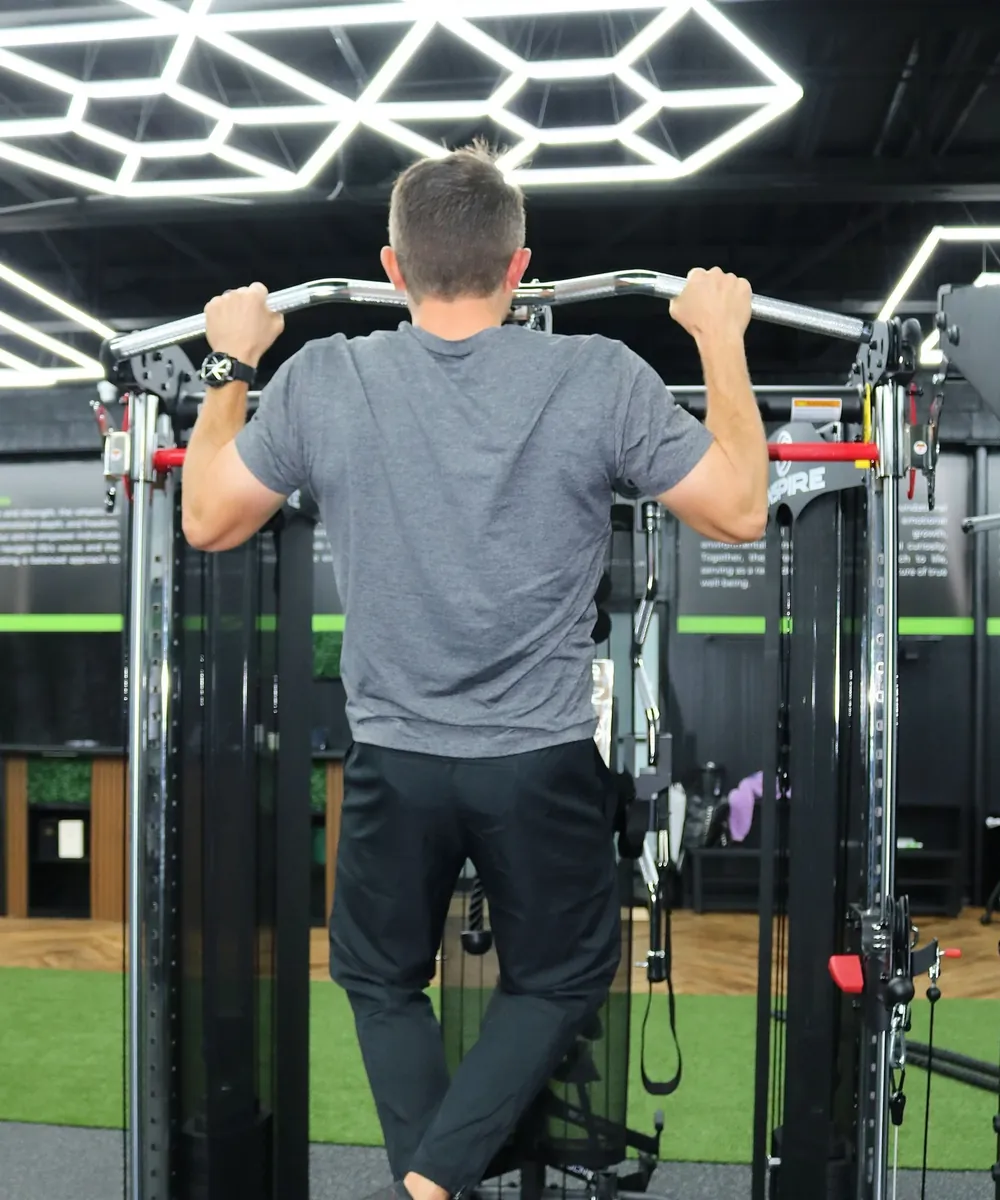
Sound familiar?
Nobody walks in describing lateral epicondylalgia. They describe days like these.
-
UsuallyTennis elbow or a grip strength that’s backed off to protect an irritated tendon.
See how hands-on treatment releases the forearm ⟶ -
OftenNerve irritation at the wrist, sometimes carpal tunnel, aggravated by a fixed position held too long.
See how physical therapy restores the position and the load ⟶ -
UsuallyTendon irritation right at the attachment point, the classic tennis-elbow spot, worse with direct pressure.
See how strength work supports the tendon’s recovery ⟶
- “My grip gives out on the coffee mug about once a week now.”
- “I’ve switched to a two-handed handshake, angled so it doesn’t hurt.”
- “Wringing out a towel is the one chore I’ve quietly handed off.”
If two or three of those sound like your week, you’re not describing a mystery. You’re describing a pattern we see often, and one an evaluation is built to explain.
Why do elbow and wrist pain happen?
There’s rarely one single cause, which is exactly why guessing doesn’t work. What we usually find, alone or in combination:
- Tennis elbow. Irritation at the tendons on the outside of the elbow, often from repetitive gripping or wrist extension, racquet sport or otherwise.
- Golfer’s elbow. The same pattern on the inside of the elbow, often from repetitive gripping or wrist flexion under load.
- Carpal tunnel or wrist nerve irritation. Pressure on the nerve running through the wrist, often worsened by repetitive typing, gripping, or sleeping with the wrist bent.
- Wrist tendinopathy. Overloaded tendons crossing the wrist, often from repetitive lifting, typing, or a new activity the wrist wasn’t conditioned for.
- Desk and device strain. Hours of typing, scrolling, or gripping a steering wheel in a fixed position that compounds through the week.
None of these are diagnoses you make yourself, and most don’t require imaging to start treating. That’s what the evaluation sorts out.
How do we treat elbow and wrist pain in Bellmore?
Treatment starts with a root-cause evaluation: testing how your wrist, forearm, elbow, and even your neck and shoulder load together, because grip trouble doesn’t always start at the grip. From there, care moves through four named phases.
The plan’s endpoint is named at your evaluation, reviewed with you every phase, because the goal is to get you back to your week, not to keep you on the schedule.
Calm it down.
Hands-on manual therapy and bracing or activity guidance that unload the irritated tendon, starting the first visit.
Restore what’s stuck.
Mobility work for the wrist and forearm actually restricting you, dosed to what the tissue can tolerate that week.
Build strength you trust.
Progressive grip and forearm strength against standards you clear before moving on, so gripping and lifting become load-tolerant again, not just pain-free.
Make it stay fixed.
Testing before you’re cleared, then a home program sized to your desk setup, sport, or job, plus coaching on the wrist position and grip habits that tend to reload the same tendon.
What does getting better look like?
People who end up booking an evaluation for elbow or wrist pain are rarely the ones who hurt it in one dramatic swing. More often, it’s a slower story: months of quietly asking for help with jars, avoiding the handshake, deciding a sore forearm is just what happens after forty. If that’s closer to your version, you’re the typical patient here, not an outlier.
Hands-on treatment starts at the evaluation itself. Progress tends to show up in ordinary places first: opening a jar without asking for help, typing past an hour without the buzz, gripping a coffee mug without a second thought.
Left untreated, the cause rarely stays quiet; it tends to change how you grip, type, and lift, and each flare tends to run a little longer than the last.
An evaluation turns that guesswork into a plan with a specific estimate, reviewed with you at every phase.
Which services treat elbow and wrist pain?
Physical Therapy
Personalized one-on-one care: find the root cause, restore, and perform.
02Personal Training
One-on-one and group sessions to build the strength and fitness that keep it from coming back.
03TPI Golf Screen
A screen of swing mechanics, movement quality, and injury history for golfers.
“If there were a Hall of Fame for physical therapists, Will would already have a bronze statue, probably holding a resistance band. I’ve known Will for several years, and every single time my body decides to fall apart and do me dirty, he somehow puts me back together better than before. He’s gotten me back to hiking, running, biking, and generally doing all the things that make me happy (and occasionally questionable choices, like signing up for another marathon). His blend of deep knowledge, creative exercises, availability, professionalism and encouraging personality makes PT not only effective, but actually fun. (Who knew?!) Will doesn’t just treat the injury, he remembers your history, your goals, and your quirks, and tailors everything so you feel seen, heard, and supported. His approach is second to none. It’s like having a coach, a cheerleader, and a detective (who’s fluent in anatomy) all in one. If you want a PT who will fix you up, make you laugh while you sweat profusely trying to maintain a one-legged RDL, and believe in you when you don’t even believe in your own hamstrings, Will is your guy.”Lori I. · Google review
Questions, answered plainly.
The things people ask on the phone about their elbow and wrist, written down.
It could be any of the three, and they can feel similar from the inside: tennis elbow usually sits on the outside of the elbow, golfer’s elbow on the inside, and carpal tunnel tends to show up as numbness or tingling in the hand along with wrist pain. The evaluation tests grip, movement, and nerve provocation to sort out which pattern, or combination, fits what you’re dealing with.
Usually not, though certain positions and loads typically get modified for a phase. Most plans work around your job and training rather than pausing them entirely: grip-heavy or repetitive movements get scaled back and reintroduced once you’ve cleared the standard. Guidance is specific to your desk setup or sport, not a blanket rest instruction.
A brace can ease symptoms temporarily by taking load off the irritated tendon or nerve, but it rarely addresses why the tissue got overloaded in the first place. Most people who rely on a brace alone find the pain returns once they take it off and go back to the same grip pattern. An evaluation identifies the cause, so the brace supports the plan instead of replacing it.
Avoid pushing through a sharp pain with gripping or twisting, repetitive motions held too long without a break, and sudden heavy lifting before you’ve been cleared. Beyond that, avoidance is rarely the fix: most people do better learning which grips are safe to load than by resting completely and waiting. Your evaluation will tell you exactly what to modify.
Start with a root-cause evaluation for your elbow and wrist.
Put it in writing.
Five short questions. Someone will reach out to you shortly with times that fit your week.
The people who end up filling this out are rarely in the worst pain of their life. They’re just done working around it, done picking the errand that doesn’t require the stairs. If that’s the stage you’re at, this is the part where you stop researching and start.
Tue 9:30 AM–9 PM
Wed 6:45 AM–9 PM
Thu 6:45 AM–4 PM, 7–9 PM
Sat 7 AM–12 PM
Sun closed
Consider it filed.
Someone will reach out to you shortly with appointment times that fit your week. Keep your phone nearby.
Can’t wait? Call (516) 460-1211 ⟶Easy to find.
On Merrick Road in Bellmore, on the South Shore of Long Island. Come see the place before you commit, if you like.
The clinic · Movement Potential Physical Therapy
Tue 9:30 AM–9 PM
Wed 6:45 AM–9 PM
Thu 6:45 AM–4 PM, 7–9 PM
Sat 7 AM–12 PM
Sun closed
Get Directions ⟶Opens in Google Maps